Cars and motorcycles
The world of cars and motorcycles represents far more than simple transportation. Whether you’re navigating city streets, planning a family road trip, or seeking the thrill of performance driving, understanding the fundamental principles of vehicle ownership can save you thousands while enhancing your safety and enjoyment. The decisions you make—from choosing the right vehicle type to mastering essential driving techniques—ripple through years of ownership costs, resale value, and daily usability.
Modern vehicle ownership demands a broader perspective than ever before. The rise of hybrid technology, advanced safety systems, micro-mobility integration, and diverse drivetrain options creates both opportunities and complexity. This comprehensive resource connects the dots between financial considerations, safety priorities, efficiency optimization, and practical skill development, giving you the foundation to make confident decisions that align with your actual needs rather than marketing narratives.
Understanding Vehicle Value and Smart Ownership Decisions
The financial reality of vehicle ownership extends far beyond the purchase price. Every choice you make—from initial selection to ongoing maintenance—directly impacts your total cost of ownership and eventual resale value. Approaching these decisions strategically can mean the difference between a sound investment and a financial burden.
Maximizing Resale Value Through Strategic Selection
Your vehicle begins depreciating the moment you drive it off the lot, but the rate of that depreciation varies dramatically. Sedans typically lose 15-25% more value than comparable SUVs over the first five years, a critical factor that should influence your purchase decision based on how long you plan to keep the vehicle. Color choice matters more than most buyers realize—neutral tones like white, black, silver, and gray consistently outperform unconventional colors by 5-10% at resale time.
The service history you maintain serves as your vehicle’s financial resume. Organized records of oil changes, brake services, and major repairs can increase resale value by 10-15% and dramatically reduce negotiation friction. Think of maintenance documentation as compound interest for your vehicle—small, consistent efforts accumulate into significant returns. Models that manufacturers discontinue face accelerated depreciation due to parts availability concerns, making continuity research an essential step before purchase.
Managing Performance and Specialty Vehicle Costs
Performance vehicles seduce buyers with horsepower and handling, but the hidden costs often shock unprepared owners. High-performance tires alone can cost $800-1,500 per set and may need replacement every 15,000-25,000 miles rather than the 50,000-70,000 miles typical economy tires deliver. Insurance premiums for sports cars and high-performance vehicles frequently run 30-60% higher than comparable standard vehicles.
Maintenance schedules intensify for performance vehicles. Oil changes may be required every 3,000-5,000 miles instead of 7,500-10,000 miles, and brake components wear faster under spirited driving. Winterizing a performance coupe—switching to appropriate tires, protecting paint from salt, and addressing reduced ground clearance—becomes an annual ritual with associated costs. Understanding these realities before purchase prevents buyer’s remorse and allows accurate budgeting for the complete ownership experience.
Modern Urban Mobility Solutions
Urban living presents unique transportation challenges that increasingly demand integrated solutions rather than relying solely on cars or motorcycles. The most successful urban mobility strategies combine traditional vehicles with complementary options, creating flexibility that matches the dynamic nature of city life.
Integrating Micro-Mobility With Traditional Vehicles
The mixed transport approach—combining car ownership with folding bikes, electric scooters, or other micro-mobility devices—offers remarkable efficiency for city dwellers. Consider the common scenario: you drive to the periphery of a congested downtown area, park affordably or freely, then complete the final mile on a compact, portable device. This strategy eliminates circling for premium parking spots while avoiding the limitations of going entirely car-free.
Safe storage remains the critical challenge. Folding bikes offer superior theft resistance because you can bring them inside offices, restaurants, and shops, while scooters typically require locking outdoors. Route planning becomes more nuanced—you’ll consider not just driving routes but also bike lane availability, sidewalk regulations, and secure parking locations. The transition points between modes require particular attention; theft risk peaks when you’re distracted by the mode switch, making routine awareness essential.
Mastering Urban Parking Challenges
Parking represents one of the most stressful and costly aspects of urban vehicle ownership. The economics of garage versus street parking extend beyond monthly fees—garage parking eliminates the time cost of searching for spots, reduces theft and vandalism risk, and prevents weather-related wear. However, at $200-500 monthly in major cities, garage parking may exceed the depreciation cost of your vehicle.
Precision parallel parking separates confident urban drivers from anxious ones. The fundamental technique involves three key reference points: aligning your side mirror with the front vehicle’s rear bumper, turning the wheel fully while reversing until you’re at a 45-degree angle, then straightening and adjusting. Modern parking sensors and cameras assist but shouldn’t replace understanding the spatial relationships. Bumper protection through careful observation of clearance becomes second nature with practice, while familiarity with local parking regulations—time limits, permit zones, street cleaning schedules—prevents costly tickets and towing incidents.
Fuel Efficiency and Hybrid Technology
The gap between advertised fuel economy and real-world performance frustrates countless drivers, particularly with hybrid vehicles where the discrepancy often reaches 20-30%. Understanding the physics and practical techniques that govern fuel consumption allows you to achieve results closer to the optimistic figures while making informed purchase decisions.
Highway driving physics work against hybrids in ways many buyers don’t anticipate. Hybrid systems excel at capturing energy during deceleration and powering low-speed movement electrically, but sustained highway cruising relies primarily on the gasoline engine, negating many efficiency advantages. This explains why hybrid vehicles often deliver their best results in stop-and-go city traffic rather than highway commutes—the inverse of traditional engine efficiency curves.
The “pulse and glide” technique maximizes hybrid efficiency by accelerating moderately (the pulse) then lifting off to glide with minimal throttle, allowing the electric motor to contribute maximally. Comparing mild hybrids versus plug-in hybrids reveals fundamentally different value propositions: mild hybrids offer modest 10-20% efficiency gains with no charging requirements, while plug-in hybrids can run 20-50 miles purely on electricity but demand regular charging and carry higher purchase premiums of $5,000-10,000.
Cold weather delivers the harshest blow to hybrid efficiency. Battery performance drops 20-40% in freezing temperatures, regenerative braking effectiveness diminishes, and cabin heating draws heavily on the system. Battery longevity optimization requires moderate climate control use, avoiding complete discharge cycles, and minimizing time spent at full charge—practices that preserve the $3,000-5,000 battery replacement investment that typically becomes necessary after 8-12 years.
Safety Considerations for Every Driver
Safety extends beyond airbag counts and crash test ratings to encompass the critical relationship between vehicle capabilities, driver skill levels, and real-world conditions. The most dangerous situation occurs when capability significantly exceeds skill, breeding overconfidence that statistics prove deadly.
Urban Vehicle Safety and Family Considerations
Small urban vehicles offer efficiency and parking advantages but introduce physics of size disparity concerns in collision scenarios. When a compact city car impacts an SUV or truck, occupant risk increases substantially due to mass differential and contact point height. This reality doesn’t invalidate small cars but should inform decision-making for families and high-collision-risk scenarios.
Advanced Driver Assistance Systems (ADAS) have revolutionized urban safety. Checking for automatic emergency braking, blind-spot monitoring, and rear cross-traffic alert should be standard procedure, as these features prevent the most common urban collision types. The comparison between city cars and compact SUVs increasingly favors the latter for families, primarily due to visibility advantages and child seat fitment. Visibility blind spots expand dramatically in smaller vehicles with aggressive styling, while compact SUVs offer elevated seating that improves sightlines and reduces the chance of overlooking pedestrians and cyclists.
Bridging the Vehicle Capability and Driver Skill Gap
Modern vehicles possess capabilities that far exceed average driver skills, creating dangerous overconfidence. All-wheel drive systems, performance brakes, and sophisticated suspension create a false sense of invincibility that evaporates precisely when conditions deteriorate. Understanding braking distance physics reveals that doubling speed quadruples stopping distance—a relationship that technology can improve but never eliminate.
Defensive driving focuses on reading traffic patterns, maintaining escape routes, and anticipating others’ mistakes rather than relying on vehicle capabilities to overcome poor positioning. Comparing drivetrain behaviors helps calibrate expectations: front-wheel drive understeers (plows forward) when pushed beyond limits, rear-wheel drive oversteers (tail slides out), and all-wheel drive delays but doesn’t prevent loss of control. The risk of overconfidence peaks during the first winter with a new all-wheel drive vehicle, when drivers discover that AWD helps acceleration but provides zero braking advantage over two-wheel drive.
Drivetrain Systems and Their Real-World Applications
The drivetrain decision—two-wheel drive, all-wheel drive, or four-wheel drive—carries significant implications for purchase cost, fuel efficiency, maintenance expenses, and practical capability. Marketing often overstates benefits while understating limitations, making objective evaluation essential.
Evaluating AWD and 4WD for Suburban Families
The myth of AWD braking advantages persists despite physics proving otherwise. All-wheel drive distributes power to all wheels for acceleration and traction but provides absolutely no braking benefit—every vehicle brakes with all four wheels regardless of drivetrain. Winter tires on a two-wheel drive vehicle outperform all-season tires on an AWD vehicle in every winter condition except deep snow requiring ground clearance.
For suburban families, the 4WD necessity question typically answers itself: if your routine doesn’t include unplowed roads, boat launches, or off-road recreation, you’re paying $1,500-3,000 extra at purchase plus 1-2 MPG ongoing for capability you’ll rarely use. The fuel consumption penalty alone costs $200-400 annually at typical mileage rates. Rollover accident risk increases with vehicle height, particularly in SUVs, making the safety argument for AWD systems less clear-cut than marketing suggests. Loading children safely matters far more than drivetrain choice—proper car seat installation prevents more injuries than any technical system.
Preparing for Off-Road and Challenging Conditions
Daily drivers occasionally face unpaved roads, muddy fields, or snow-covered driveways, and modest preparation expands capability without requiring dedicated off-road vehicles. Ground clearance importance cannot be overstated—an additional two inches of clearance prevents countless stuck situations and undercarriage damage. Knowing basic recovery gear usage (tow straps, recovery boards, proper anchor points) transforms minor obstacles into manageable challenges.
Terrain technique awareness prevents most amateur off-road failures. Maintain momentum through soft surfaces but move slowly over rocks; pick lines that keep weight on high-traction surfaces; understand when to air down tires for flotation (typically to 15-20 PSI for sand or deep snow) and when to maintain pressure for rocky terrain. Water crossing risk assessment follows a simple rule: if you cannot see the bottom or clearly know the depth, find another route. The cost of a hydrolocked engine ($3,000-8,000 in repairs) far exceeds the inconvenience of turning around.
The automotive landscape offers unprecedented choice, but that choice creates complexity that can overwhelm unprepared buyers and owners. By understanding the core principles governing vehicle value, urban mobility integration, efficiency optimization, safety priorities, and drivetrain applications, you equip yourself to navigate decisions confidently. Each topic explored here connects to deeper expertise available in specialized resources, allowing you to dive deeper into areas most relevant to your specific situation and goals.
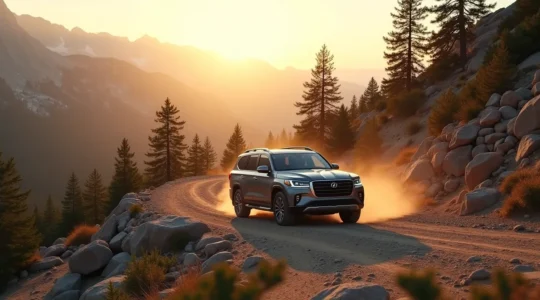
How to Take Your Daily Driver Off-Road and Not Wreck It
You dream of exploring backcountry trails, but the fear of damaging your essential daily vehicle holds you back. The secret isn’t a massive budget for modifications. It’s about mastering a few key principles of physics and driver skill—like managing tire…
Read more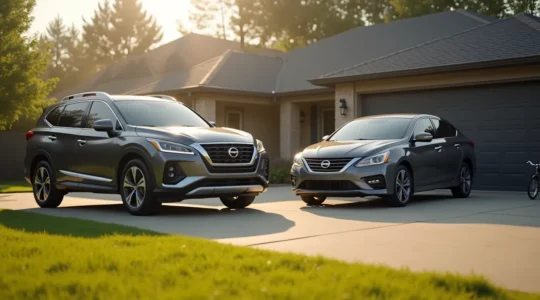
Do You Really Need a 4×4 SUV for Suburban Living?
For suburban families, the perceived safety of All-Wheel Drive is largely a myth that costs thousands of dollars without adding real-world protection. All-Wheel Drive (AWD) improves acceleration but dangerously offers zero benefit for stopping or turning on ice and snow….
Read more
How to Safely Handle a High-Performance Car on Public Roads?
Safely handling a performance car isn’t about raw talent; it is about disciplined control, a deep understanding of physics, and calibrating your own senses to the vehicle’s reality. The laws of physics are non-negotiable: you must master energy management, as…
Read more
What Are the Hidden Costs of Owning a Sport Coupé as a Daily Driver?
Contrary to the belief that you can afford a sport coupé if you can handle the monthly payment, the true cost is a punishing “subscription” you pay per mile, not per month. Performance “consumables” like tires and brakes wear out…
Read more
How to Protect Your Car From Damage When Parking on the Street Daily?
The real cost of street parking isn’t the meter; it’s the constant threat of damage, fines, and towing that basic precautions fail to prevent. Effective protection involves a mix of financial calculation, mastering defensive parking geometry, and applying layers of…
Read more
Are Modern City Cars Safe Enough for Highway Travel? A Crash Analyst’s Verdict
The 5-star safety rating you rely on can be dangerously misleading for a small city car in a real-world highway collision. Physics is not on your side; the “mass disparity” between a small car and a larger vehicle like an…
Read more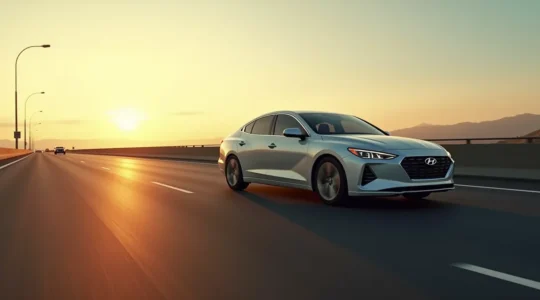
Why Does Your Hybrid Car Not Achieve the Advertised MPG in Real Driving?
Contrary to feeling misled, the gap between your hybrid’s advertised and real-world MPG isn’t a deception; it’s a result of fundamental engineering compromises. High-speed driving forces the car out of its “efficiency island” as aerodynamic drag overwhelms the electric motor’s…
Read more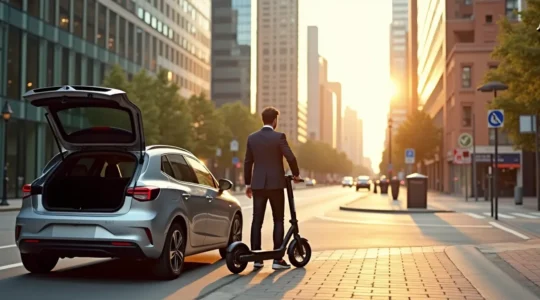
The Integrated Commute: How a Car and E-Scooter System Beats Urban Gridlock
The key to an efficient urban commute isn’t just owning a car and an e-scooter; it’s engineering a seamless logistical system that eliminates last-mile friction. Driving the final mile is a losing battle against congestion and the hunt for parking….
Read more
Which Car Features Best Protect Resale Value After 5 Years?
The single most impactful factor in your car’s resale value isn’t its brand, but the strategic combination of features, color, and body style you choose at purchase. Practical features like 4WD and advanced safety systems consistently offer a higher Return…
Read more