The financial return of any home renovation is determined less by the project itself and more by its alignment with local market expectations and buyer psychology.
- Projects with broad emotional appeal (kitchens) consistently outperform purely functional upgrades (roofs).
- The value of any improvement is capped by the “appraisal ceiling” of your specific neighborhood.
Recommendation: Before committing funds, analyze recent comparable sales and apply the “Reversibility Test” to any personal design choice to think like an appraiser and maximize your return on investment.
For homeowners planning to sell in the next three to five years, every renovation decision is an investment. The central question is not just “Will this make my home better?” but “Will this make my home more valuable to a future buyer?” It’s a landscape filled with conflicting advice. Many articles champion kitchen and bathroom remodels as guaranteed wins, while others praise the undeniable impact of curb appeal. This often leads to a scattergun approach, where money is spent on projects that feel good but may not translate to a higher selling price.
The common mistake is focusing on a list of “good” renovations instead of understanding the market dynamics that give them value. The true financial return is dictated by a combination of buyer psychology, local market standards, and the principle of conformity within a neighborhood. A project that adds significant value in one area could be a financial loss in another. The key is to shift from thinking like a homeowner to thinking like a real estate appraiser—analyzing every potential upgrade through the cold, hard lens of market data and buyer appeal.
This guide abandons the generic lists of “top renovations.” Instead, it provides a strategic framework for evaluating which improvements will actually increase your home’s resale value. We will explore the psychological difference between emotional and functional upgrades, the critical role of comparable sales, and the costly mistake of over-improving for your specific block. By adopting an appraiser’s mindset, you can make informed, data-driven decisions that protect your equity and maximize your final sale price.
This article provides a detailed breakdown of the principles that drive renovation ROI. The following summary outlines the key areas we will explore to help you make the most profitable decisions for your property.
Summary: The Appraiser’s Framework for Renovation ROI
- Why Buyers Pay a Premium for Kitchens but Ignore New Roofs?
- How to Estimate Your Home’s Value Using Comparable Sales?
- Swimming Pool vs. Additional Bedroom: Which Adds More Value?
- The Mistake of Making Your House the Most Expensive on the Block
- Sequencing Your Sale: Why Landscaping Should Be Your First Investment?
- Problem & Solution: Selling a Fixer-Upper When Buyers Want Turnkey Homes
- Why Buying a Bright Green Car Could Cost You $2,000 at Resale?
- Is It Smarter to Buy or Rent During a Volatile Housing Market?
Why Buyers Pay a Premium for Kitchens but Ignore New Roofs?
People buying a house look first at kitchens and baths.
– Kermit Baker, Joint Center for Housing Studies at Harvard University
The disparity in return on investment (ROI) between different renovations is rooted in buyer psychology, specifically the difference between emotional value and functional expectation. A kitchen is the heart of the home, a space where potential buyers envision their daily lives—family dinners, entertaining friends, and morning coffee. This emotional connection makes them willing to pay a premium for a modern, bright, and functional kitchen. It’s a tangible fantasy, and market data confirms its power; with some projects, like minor kitchen remodels, delivering a 96% return on investment (ROI).
Conversely, a new roof, a new HVAC system, or updated plumbing are considered functional expectations. Buyers assume these components are in good working order. They don’t tour a home and get excited about a 30-year architectural shingle; they simply expect not to have to worry about it. As such, replacing these items doesn’t typically add significant dollar-for-dollar value. Instead, it removes a potential negative. A failing roof will absolutely detract from your home’s value and could kill a deal, but a brand-new one is simply meeting the baseline standard. Buyers don’t pay extra for things that are “supposed to work.” The value is in the visible, lifestyle-enhancing upgrades, not the invisible, essential maintenance.
How to Estimate Your Home’s Value Using Comparable Sales?
Before planning any renovation, you must establish a baseline: your home’s current market value. The most reliable method used by appraisers is the Sales Comparison Approach, which involves analyzing “comps”—recently sold properties that are similar to yours. This process isn’t about finding an identical house; it’s about making data-driven adjustments to account for differences. A comp with a renovated kitchen will sell for more than one without, and this price difference is a direct indicator of the local market value of that specific renovation.
To perform a basic analysis, you must identify at least three properties in your immediate neighborhood that have sold within the last 3-6 months and are similar in size, age, and style. The key is the adjustment phase. If your home has four bedrooms and a comp has three, you add value to the comp’s sale price to normalize it. If a comp has a two-car garage and you only have a carport, you subtract value. This methodical process provides an objective, defensible estimate of your home’s value and prevents you from investing in upgrades that the local market won’t support. As a rule, appraisal guidelines suggest a 10-15% maximum adjustment for any single feature; larger adjustments indicate the property is not a true comparable.
Action Plan: Feature-by-Feature Home Valuation
- Identify Comps: Find at least 3 recently sold comparable properties in the same neighborhood with similar square footage.
- Analyze Features: Compare each comp against your property, noting differences in bedrooms, bathrooms, garage, pool, and recent renovations.
- Adjust Prices: Adjust comparable sale prices based on these differences. Add value to the comp’s price if your home has a superior feature; subtract value if it’s inferior.
- Calculate Adjustments: Assign a dollar value to major differences. Consult local real estate agents for typical adjustment values in your market (e.g., the value of an extra bathroom).
- Estimate Value: Average the adjusted prices of your comparable properties to establish your home’s estimated market value range.
Swimming Pool vs. Additional Bedroom: Which Adds More Value?
The debate between adding recreational features versus functional living space highlights the critical importance of broad appeal and regional context. While a swimming pool might seem like the ultimate luxury upgrade, its value is highly dependent on climate and neighborhood demographics. In warm-weather markets like Florida or Southern California, a pool is often an expected feature that can add 5-8% to a home’s value. However, in cooler climates, it can be a liability due to high maintenance costs and a short usage season, potentially adding no value or even deterring buyers. For example, a pool can add over $95,000 in value in Los Angeles but less than $12,000 in Phoenix, showing extreme market variability.

An additional bedroom, on the other hand, almost universally adds value. It expands the functional square footage of the home and broadens its appeal to a larger pool of potential buyers, particularly growing families. A family can always use an extra room—as a bedroom, home office, or gym—but not every family wants the expense and liability of a pool. This wider appeal translates directly into a more significant and more reliable return on investment, often adding 15-20% to the home’s value. The following table breaks down the core differences in this investment decision.
| Feature | Swimming Pool | Additional Bedroom |
|---|---|---|
| Average Value Added | 5-8% of home value | 15-20% of home value |
| Best Markets | Warm climates (FL, AZ, CA) | Family neighborhoods, good schools |
| Installation Cost | $35,000-$65,000 | $20,000-$50,000 |
| Annual Maintenance | $3,000-$5,000 | Minimal |
| Buyer Appeal | Climate & demographic dependent | Broad appeal across demographics |
| Flexibility of Use | Seasonal, recreation only | Year-round, multiple purposes |
The Mistake of Making Your House the Most Expensive on the Block
Don’t exceed the ceiling for the neighborhood, or you won’t get your money back.
– Israel Ramos, Real estate agent, Phoenix, Arizona
One of the most critical concepts in real estate appraisal is the “principle of conformity,” which states that a home’s maximum value is achieved when it aligns with the standards of its neighborhood. Every neighborhood has an “appraisal ceiling”—an upper limit on property values that even the most luxurious renovations cannot break through. If the average home on your street is valued at $400,000, installing a $150,000 professional-grade kitchen and a spa-like master bathroom will not result in a $550,000 appraisal. You will have created the “best” house on the block, but buyers looking for a half-million-dollar home will be shopping in neighborhoods where that is the norm, not the exception.
Over-improving is one of the fastest ways to lose money on renovations. An appraiser is bound by the comparable sales in the immediate area. They cannot justify a value that is significantly higher than the most expensive recent sale, regardless of how much you’ve invested. A smart renovation strategy respects this ceiling. As a general guideline, many industry experts recommend not spending more than 30% of your home’s current value on total renovations if your primary goal is resale. This forces you to prioritize projects with the highest ROI and prevents you from pricing your home out of its own market. Your goal should be to have one of the nicest homes in the neighborhood, but not necessarily the most expensive.
Sequencing Your Sale: Why Landscaping Should Be Your First Investment?
In the sequence of pre-sale preparations, landscaping and curb appeal should be your first, not last, consideration. The exterior of your home is the first thing a potential buyer sees, both online in listing photos and in person when they pull up to the curb. This first impression sets the tone for the entire showing and anchors the buyer’s perception of value before they even step through the front door. A neglected exterior with overgrown shrubs and patchy grass signals to a buyer that the home may have deferred maintenance issues inside as well, leading them to anticipate problems and mentally lower their offer price.
Conversely, a well-maintained, attractive exterior creates an immediate impression of quality and care. This is why curb appeal projects consistently generate some of the highest returns on investment in real estate; as certain curb appeal projects can deliver returns of up to 200% on the investment. These improvements don’t have to be expensive. Even a modest investment can have a significant impact:
- $500 Curb Appeal Blitz: Applying fresh mulch throughout flower beds, creating sharp edging along the lawn, placing seasonal potted flowers at the entry, and power washing the driveway and walkways.
- $2,000 Upgrade: Laying new sod in highly visible areas, getting trees professionally trimmed, installing modern house numbers, updating the mailbox, and applying a fresh coat of paint to the front door.
- $5,000+ Makeover: Installing a low-voltage LED pathway lighting system, designing flower beds with low-maintenance perennials, adding an irrigation system, or creating decorative stone borders.
By investing in curb appeal first, you maximize the impact of every marketing dollar spent and ensure that your home presents its best self from the very beginning of the sales process.
Problem & Solution: Selling a Fixer-Upper When Buyers Want Turnkey Homes
The modern real estate market is dominated by a demand for turnkey properties. Many buyers, influenced by home design shows, want to move in without having to do any work. This presents a significant problem for sellers of “fixer-upper” homes that require updates. The challenge is bridging the gap between a home’s current state and a buyer’s fear of the unknown. Buyers often overestimate the cost and complexity of renovations, causing them to either pass on the property or submit a lowball offer that more than covers the potential work.
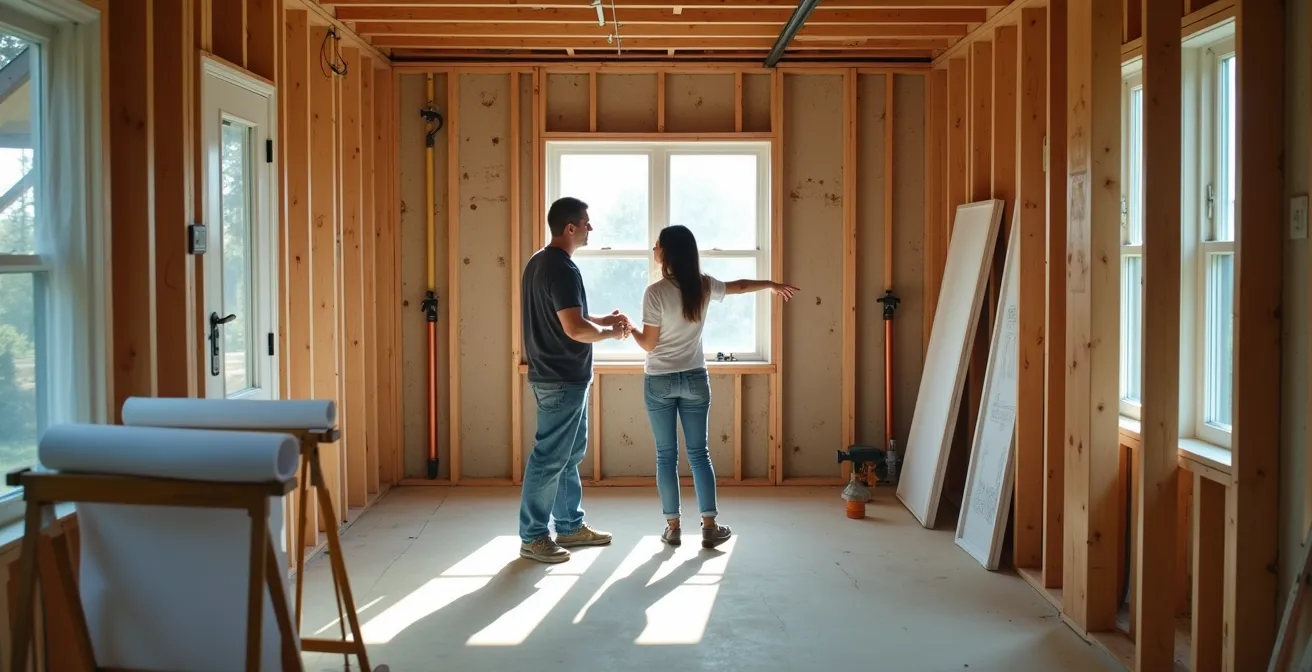
The solution is not always to undertake a full-scale renovation, which may not be financially feasible. Instead, the strategy is to reduce buyer uncertainty and showcase potential. One of the most effective approaches is to work with professionals to create a clear vision for the buyer. Consulting with a real estate agent who understands the local market can help identify the most critical upgrades. Furthermore, bringing in a designer or general contractor to provide realistic quotes and even architectural renderings can be a powerful marketing tool. Presenting a buyer with a clear, professional plan for a kitchen remodel—complete with a reliable cost estimate—transforms a scary, undefined project into a manageable, exciting opportunity. It helps them see the finished product, not just the current problems, thereby preserving your home’s value.
Why Buying a Bright Green Car Could Cost You $2,000 at Resale?
While the title refers to cars, the principle is directly applicable to home renovations: hyper-personalization is the enemy of resale value. A bold, trendy design choice that you love—like a bright green accent wall, a highly specific custom tile backsplash, or unique luxury fixtures—narrows your pool of potential buyers. Every buyer who walks through your home is trying to envision themselves living in the space. The more your personal taste dominates the design, the harder that becomes for them. They don’t see a beautiful home; they see a project and a price tag associated with changing it to fit their own style.
This is why neutral, timeless choices for expensive, fixed elements are always the safest bet. Classic subway tile, neutral quartz countertops, and simple hardwood floors have broad appeal and allow buyers to easily project their own vision onto the space. Data shows that overly personalized or luxury custom features often yield less than a 50% return on investment because their value is subjective. To avoid this pitfall, apply the “Reversibility Test” to every design decision:
- Assess the Risk: Before making a bold choice, calculate the cost in time and money for a future buyer to reverse it.
- Low Risk: Paint colors. This is the easiest and cheapest element to change ($200-$500). Feel free to be bold here.
- Medium Risk: Cabinet colors, light fixtures, and hardware. These can be refinished or replaced, but it requires more effort and cost ($2,000-$5,000).
- High Risk: Flooring, countertops, and custom tile work. These are expensive and disruptive to replace ($10,000+). Always choose timeless, widely appealing materials for these elements.
Key Takeaways
- Think Like an Appraiser: Base renovation decisions on comparable sales and neighborhood value ceilings, not just personal preference.
- Prioritize Broad Appeal: Choose neutral, timeless designs for expensive, fixed elements to attract the widest possible pool of buyers.
- Focus on Emotional ROI: Invest in highly visible, lifestyle-oriented spaces like kitchens and curb appeal, as they have the greatest psychological impact on buyers.
Is It Smarter to Buy or Rent During a Volatile Housing Market?
Pivoting this question to renovations, homeowners often ask: “Is it smarter to renovate now or wait, especially in a volatile market?” The answer depends on market conditions and your specific goals. A volatile market presents both risks and opportunities. On one hand, economic uncertainty can soften buyer demand, potentially lowering the immediate ROI of a major renovation. On the other hand, a cooling market can be an ideal time to get work done. As West Shore Home notes in their guide, “When the market cools, high-quality contractors have more availability and are more competitive on pricing.” This could allow you to complete a project for a lower cost.
Market timing can dramatically affect your financial return. For instance, market conditions show that a kitchen remodel ROI increased from 71% in 2022 to 96% in 2024, highlighting how quickly profitability can change. Renovating in a “hot” seller’s market might yield a higher immediate return, but you’ll likely pay a premium for labor and materials. Renovating in a “cool” buyer’s market might secure lower project costs, but you may have to hold the property longer to realize the full value appreciation. The smartest strategy is not to try and time the market perfectly, but to align your renovation timeline with your selling timeline. If you plan to sell within 1-2 years, focus on high-impact, quick-turnaround projects. If your timeline is 3-5 years, you have more flexibility to undertake larger projects and ride out short-term market fluctuations.
To put these strategies into practice, begin your analysis by applying the comparable sales method to understand your home’s current market position and identify the most logical areas for investment.